Taking action

Recently, I found myself with an assignment that I wasn’t enjoying. The date that I had allocated to start the work came and went, and I found it hard to motivate myself. I am generally quite good at what I call “productive procrastination,” so I try and busy myself with other smaller things. It worked… except a second assignment start date was creeping up and then, I found myself behind schedule.
If I was honest with myself, my mind was preoccupied with other personal anxieties (which I won’t go into here), and that is ok. But on top of that, I felt disorganised, my notes for my current projects were awry, and I was context switching my worries about the different things that I was meant to be doing. That last one is a real doodoo.
Then, a friend and I joked about trying Bullet Journaling (BuJo for short) again. Yes, again, because I’ve tried it twice in the past and both times, it didn’t stick. So, why should I even attempt a third? And why am I so hard-up about BuJo? And what even is Bu-Jo? Well, these are all good questions and I will try to answer them one at a time.
Why should I attempt a third try?
Third time lucky?
It’ll be different!
Why not?
New notebook!
New stationery!
I mean, after those last two reasons, do I need more reasons? :)
Why the obsession with BuJo?
Honestly, it’s not about BuJo. It’s about the idea of being that person who is organised in a creative and aesthetically cool way. I’ve always loved BuJo because of the exceedingly amazing examples of them that you can find on the internet. I didn’t care if they were used on a daily basis or not. I didn’t care too much if they were even useful. I just loved the idea of them—to be able to fill up a whole journal so neatly and beautifully! It was almost as enticing as writing a novel. Well… almost.
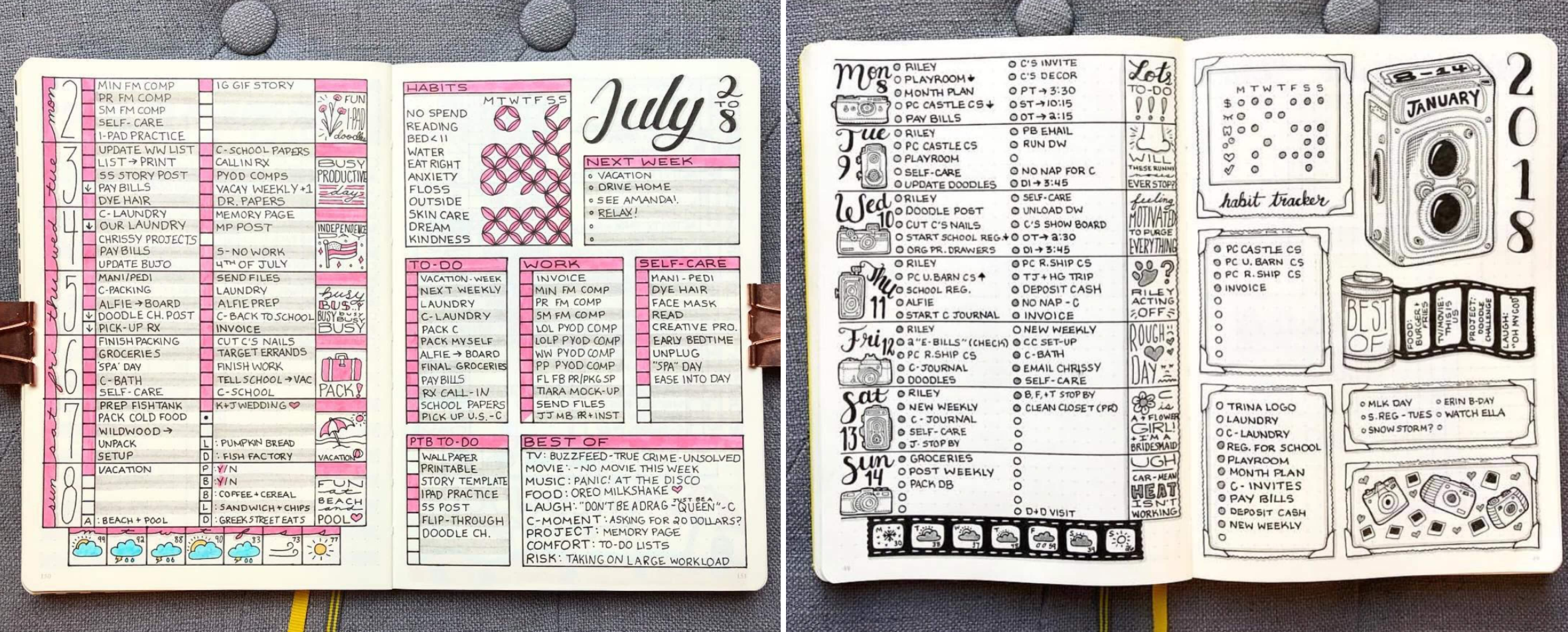
But, what the f*** even is BuJo?
Wikipedia says: A bullet journal is a method of personal organization developed by designer Ryder Carroll. The system organizes scheduling, reminders, to-do lists, brainstorming, and other organizational tasks into a single notebook. The name “bullet journal” comes from the use of abbreviated bullet points to log information, but it also partially comes from the use of dot journals, which are gridded using dots rather than lines. First shared with the public in 2013, it has become a popular method, garnering significant attention on social media.
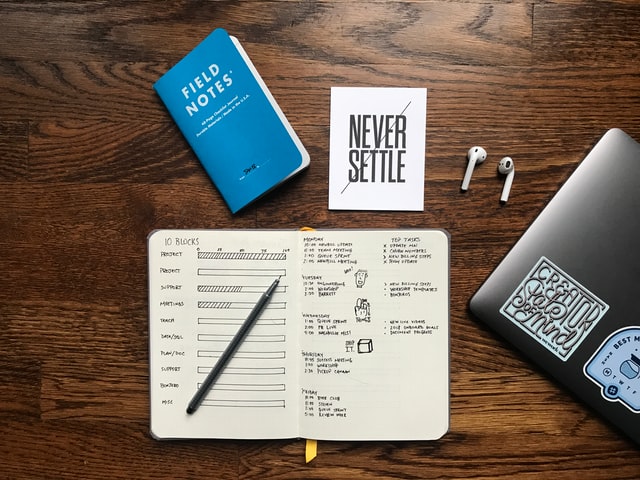
I knew that my wanting to try BuJo again was a cry for help in some ways. I needed to feel like I’ve got my life in control again. And so, on another productive procrastination streak, I armed myself with a new notebook (I make my own, by the way. If you’d like one, see details at the bottom) and jumped down the BuJo rabbit hole on the internet for a spot of research. Somehow, I was hopeful that I will find a solution this time.
The right mindset
I came across Matt Ragland’s YouTube videos and sampled a few. I liked them over the others that I have seen because he has the right mindset to what journaling should be: creating a sustainable habit. Matt’s videos were clear and though I didn’t use all of what he taught (this is an important point I’m trying to make) I believe I took on the most important thing he taught: BuJo needs to work for me, not the other way around.
Now that I’m on my third try (and in a completely different state of mind—I’m no longer infatuated with the aesthetics!) I knew that I did want BuJo in my life, but under my own terms. I spent some time considering what is important to me in organising my work and life, and what my work cycles are like, and I went with a weekly journal.
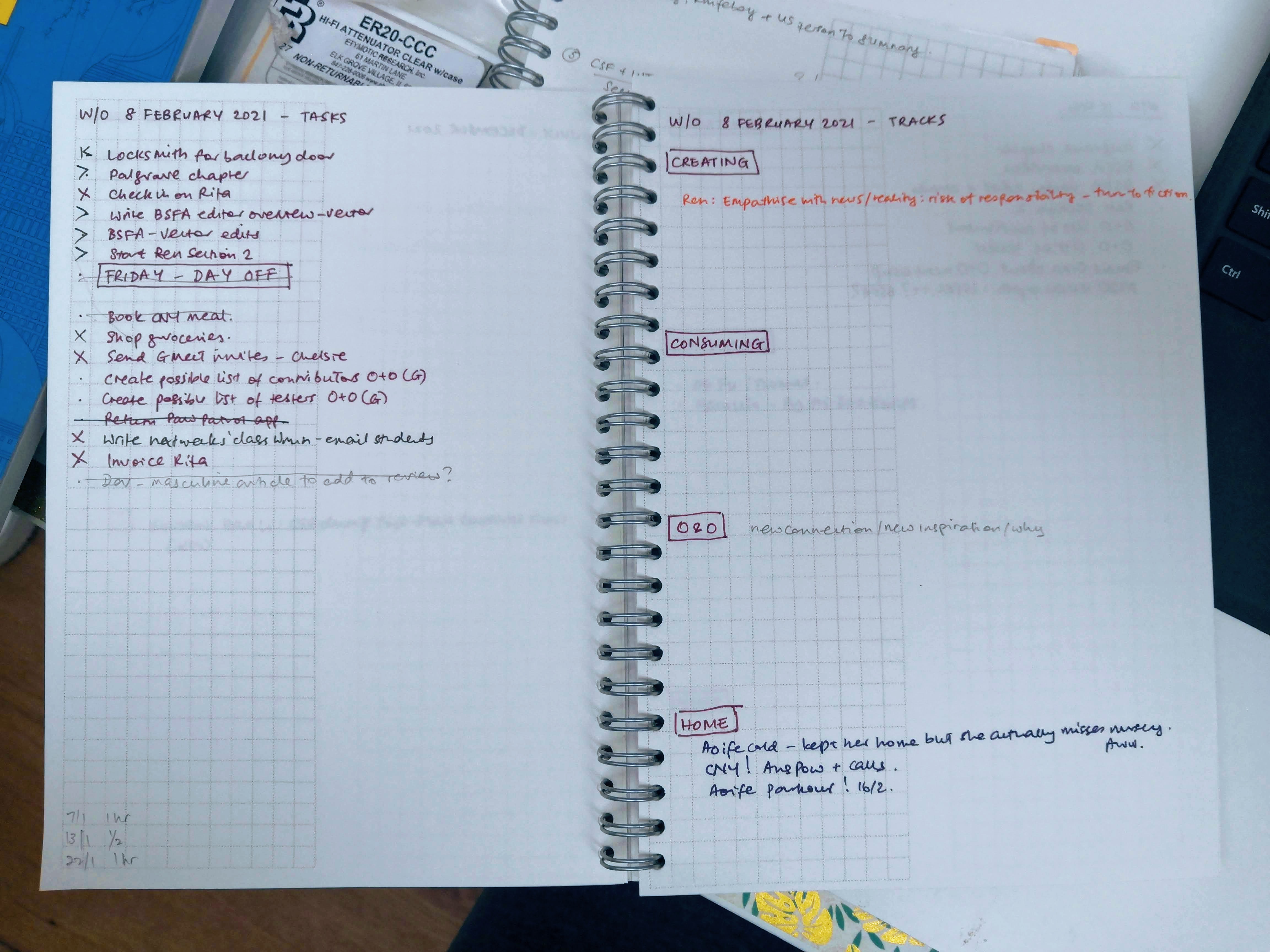
And where beautiful BuJos would have a yearly planner in the front of the journal, Matt noted that he only does a three-monthly planner, which is what he needs. Mine is a six-monthly planner as I often need to note deadlines for submissions or dates for events that I’m planning or organising.
Most importantly though, I think, is to note that I already have a zero inbox habit to pair up with the BuJo. If you don’t know what zero inbox is, in simple terms, it is about using your inbox as an action list. The only items you want to keep in your inbox are items that you need to action. Otherwise, the email gets archived or deleted. I try to keep my inbox to under twenty messages maximum and as near to zero whenever possible. As you can imagine, when you’re in the middle of a project or concentrating on work, you don’t want to be bothered with emails, and that would mean that the inbox would pile up, and that’s ok. But as soon as I sit down to just sort out emails, I read, cull, and archive first, leaving all the emails that I need to respond to or action, for later.
I know I’m digressing, but BuJo and zero inbox do have one thing in common: whenever you find yourself with a task (in BuJo) or an email in your inbox that has been left there for days-weeks-months… it probably needs to be archived or deleted, as it probably won’t ever get done. Consider this a Marie Kondo for your digital life tip. Anyway…
What I love, this time around
I’m learning that BuJo isn’t only about productivity, but also self-care, so I’m giving myself more space to note down the things that are important to me.
A friend recently told me that they love WhatsApp ‘accountable groups’ where members would just type ‘done’ when they’ve completed the task (whatever it is depending on the group, e.g. writing, running, meditating, etc.). She said that seeing others doing it inspired her to take action too. Not needing to report the details (how many words you’ve written, how far you ran, how long you meditated for, etc.) takes the pressure off the task and makes it more enjoyable.
I’m using my BuJo in this way, as it lets me look back at each day or week and remember how it felt after the activities. No doubt, it gives me pleasure in being productive too, not only in my work, but also in my self-care.
Finally, in understanding that journaling will constantly change and grow with us, with the circumstances in our lives, I feel like my journaling practice can be like a best friend. It’s there when I need them, for difficult times and good times, and if I ever let our relationship or connection lapse, it doesn’t matter, as like a good friend, they’ll always be there for us when I’m ready to reconnect.
If you’re finding yourself developing new habits through lockdown, why not comment below or email me. I would love to hear about why you started your new habit, how it is going, and whether you would recommend it to others.
