Sleep is essential
"however... having dreams is a serious psychic disturbance" Zamyatin (p.46)

I broke my reading block this week with Yevgeny Zamyatin’s We. Everything I picked up before this book just couldn’t hold my mind, but We did it.
Once upon a time…
I grew up without any formal education in English literature. Sure, I learnt to read like everyone else, but I was never exposed to the canons, the basic reading lists like Charles Dickens, Jane Austen and the likes. I would describe my relationship with books and reading to be an organic one. Having parents who always encouraged me to read, I could pick any books I wanted from the library or the bookshop, and I would do so by judging its cover (c’mon, everyone does it!), reading the summary, or bingeing on all of one author’s work at a time.
This habit still remains with me today, where I have a stack of books to read that I have bought because I fell in love with the cover or summary, or both. We was one of them.
there was a book…
I found it at an Oxfam (charity shop) near us and I bought it probably three years ago now. It sat on my bookshelf all this time, just waiting for the right moment… which happened to be last week.
I dived into the book with no knowledge of it or the author whatsoever, and was quickly surprised by how similar it was to Nineteen Eighty-Four by George Orwell (1949). The world, the concepts, the spirit of it is primarily the same. It could actually be the same world. Having done a quick search on it though, it seems that Orwell denies getting any inspiration from We, which was originally written in Russian in 1920-21, first translated into English in 1924 - with the version that I read translated in 1970.
of love…
What is different and refreshing in We, is the simplicity of the story. It is a love story. It talks about the things we would do because of love. It shows us how easily we are blinded by love. It reminds us that being human is to be vulnerable to love.
While reading, I found it apt to visualise a world that was like Gattaca (Niccol, 1997) with a touch of steampunk. The latter was inevitable due to the dated language, but I found that this added to the beauty of it.
Fantasy is a worm whose boring leaves black furrows on your brows. Fantasy is a fever which drives you on to further and further flight, even though this further point may begin where happiness ends. Fantasy is the last barricade on the road to happiness.
Zamyatin, Y, We (Great Britain, Penguin Books, 1972) p.173
that defied logic…
He juggles our very human need for structure and logic in a world that isn’t built with clear form, suggesting that to achieve some kind of enlightenment, we have to abandon our never-ending race to find happiness.
Well, at least that is my interpretation of We, owing or not to our current quarantine.
Before picking up We, I tried reading Shikasta by Doris Lessing. Both these books are written in a similar style - first person, journal. With Shikasta though, I only managed about 35 pages before I had to stop and put it away.
and pleaded to humility.
I felt defeated and useless for not being able get into Shikasta and I had to take time to consider why. The answer was surprising - the protagonist’s voice was too condescending and colonial. It reeked of power and privilege in how it views the world without humility or awareness. The coldness was not due to science, as we would have been made to believe, it was due to arrogance.
This, I know is a big statement to make only after reading just thirty-odd pages, but, first impressions count. Perhaps I’ll be able to stomach this better in a different time, when we - humans - have succeeded in colonising the world of viruses. Will that be enough? Or do we have to conquer it?
The end.
So, why not give ourselves dispensation to love, to open up, to embrace life before it’s all too late. For sleep is essential, and sleep will always be victorious in the end.
What are you currently reading? Anything you’d like to recommend? Let us all know in the comments below.
I’ll leave you with another poem from my book, A Suspicious Collection. It’s a little dark, but a favourite of mine.
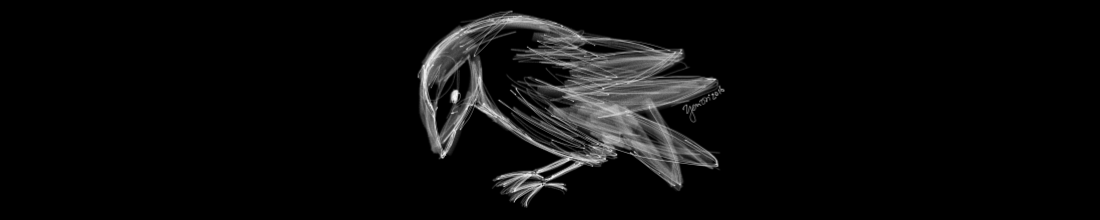
Death
She waits patiently,
never rushing, never hurrying,
never asking either. She picks —
not favourites, not at random —
she just picks from a list Fate gave her
and takes them.
They go with her,
sometimes fighting, sometimes willingly
but always they go,
to a better place,
to an unknown
place.
And those who are left behind?
They mourn.

Photo by Clint McKoy on Unsplash
