In two minds about being nice

The Master said, ‘Is benevolence really far away? No sooner do I desire it than it is here.’
Confucius, The Analects, Book 7: 30
I’ve been reading The Analects for research and have found myself taken by Confucius’s teachings of Rén (仁), which is translated into English as ‘benevolence’ or ‘humane’. It explores ways in which we can be better people through the way we treat each other.
Today, I read two articles that gave me contradictory thoughts about people, and why we act the way we do. I know, as a species, we are a whole palette of colours and we are never just black or white. But, as a realist (I find the term cynic too negative—lol) and a researcher, positive articles seem to make uninteresting reading. Or perhaps it’s just my science fictional inclination that requires everything to be dystopian.
I’m naturally nice, you know.
The first article was this piece called ‘Why Are People Being So Nice?’ published in the art journal, e-flux. This was easy to wrap my head around as it suggests that our neoliberal-capitalist world has conquered even our actions of being nice. In the service-oriented rate-able world we live in, all of us are seeking our 5-stars, so we play nice.
“It [being nice] speaks to a demand, in neoliberal economies, for the wholesale invention, performance, and perpetual grooming of a transactional ‘self.’ [see original article for footnote] ‘Really nice’ really means ‘frictionless,’ or ‘low transaction cost’.”
Martha Rosler
How often have we heard the term ‘high maintenance’ being used on people? This just implies that some people are inefficient for relationships and suggests that they are not good to have in our lives for being ‘too much work’.
If we get stuck together on a desert island
Then, I read ‘The real Lord of the Flies: what happened when six boys were shipwrecked for 15 months,’ an article by Rutger Bregman in The Guardian. It’s a brilliant article about a group of boys who actually got shipwrecked on an island, and made the most out of their 15 months together while stranded. They organised themselves, helped each other, settled differences, and most importantly, survived healthily!
It was nothing like the book, Lord of the Flies by William Golding, some might even add, disappointingly. And the real reason for this ‘disappointment’, is that we expect entertainment whether in real life or fiction, and it’s not a satisfying read if it doesn’t have conflict, create tension, or blow our minds.
You know what though, the reality of the ship story did blow my mind.
This story made me think about one of the (many, many!) influences to human behaviour that might explain both these articles: our ability as a species to prioritise for survival.
We’ll become best friends
If we strip our needs down to the barest—as the boys had to endure while shipwrecked—we can consider that working together to build shelter, find food, and protect each other was necessary for their survival.
If we strip our needs down to the barest—as people living in a service-oriented, rate-able, neoliberal-capitalist world—we can consider that being nice to each other to gain more and better work, is necessary for our survival.
So, ultimately, when we work together and are being nice to each other, we are just being human.
Does it really matter if we’re ‘being nice’ for survival purposes? Is kindness less valuable if it comes from a place that isn’t truly altruistic?
Maybe it’s the sunshine, or the fact that I’m enjoying a beautiful long weekend with my family, but I think the answer is no. After all, we are not looking for sainthood or enlightenment. We are just looking to be better humans and this is the right step towards achieving it.
“It’s time we told a different kind of story. The real Lord of the Flies is a tale of friendship and loyalty; one that illustrates how much stronger we are if we can lean on each other.”
Rutger Bregman
And maybe, I am finding inspiration in positive articles, after all.
Next week, I will be sharing a piece of short story that is a work in progress. Due to privacy and copyright issues, all previously unpublished stories, creations and more personal notes will only be made available to paid subscribers.
Thank you for your support, always.
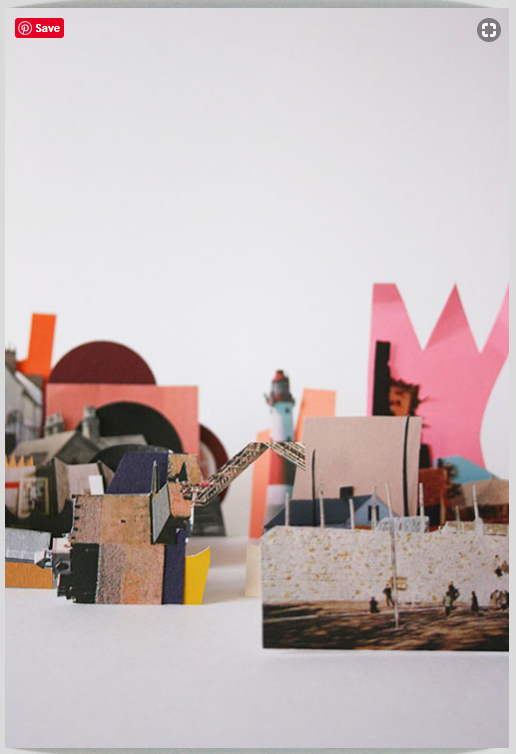
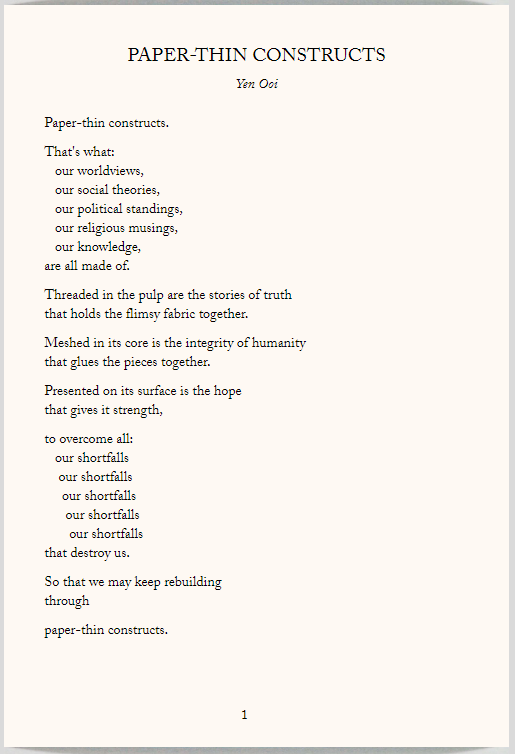
To end, I’ll leave you with a poem I wrote for Visual Verse, Vol. 6, Chapter 1, titled ‘Paper-thin Constructs’.