ॐ
"Om is where the art is." Gita Mehta

Gita Mehta has a way of bringing anyone out of their airy-fairy thoughts all the way back down to the grittiness of reality with poise and humour. In all that, Karma Cola, Marketing the Mystic East was the perfect book to give me the kick in the backside I so needed to pull my head out of my ‘I need to write a perfect book’ butt, and just keep going with the work of writing.
Truly, writing is a job like all other jobs. But, because it is a creative job, art is compulsory.
Existential identity crisis
There is that difference between being kicked in the teeth and reading a description of being kicked in the teeth. Some call it existential.
Mehta, G, Karma Cola, Marketing the Mystic East (US, First Vintage International Edition, 1994) p.36
As an immigrant (Malaysia->UK) who is the child of an immigrant (China->Malaysia), I find discussions of religion and philosophy highly comparable to questions of identity and ethnicity. This is made more prominent with the fact that English was my first (studied) language and is the main language I use. I’ll try to explain this.
In one of her wonderful stories, Mehta tells us that ‘America has taken our [India’s] most complicated philosophical concepts as part of its everyday slang… Whose interpretations should be accepted as final authority—the Sanskrit scholar’s or the street hustler’s?’ (p.99) The answer to this is neither and I’ll use another quote within the same book. ‘It is unlikely that either the Occidental or the Easterner has the stamina to survive this exchange of views, yet both insist on trying and both use irrelevant language to camouflage the contradictions.’ (p.101)
My relationship with religion is as clear as my understanding of my identity, murky at best. Who I am must be taken as a whole, not as different parts, for the Chinese-Malaysian-British in me cannot be separated. Heck, the three-years that I lived in Japan adds to this wonderful cauldron that further problematises any attempt at trying to identify myself more clinically.
And yet, I keep doing it.
I see this need for self-awareness as puzzling as anyone’s need to find enlightenment. And I reckon the solutions for both are similar… in that they’ll appear when we (I) stop looking. As one of the gurus in Mehta’s stories says, “…there is no cause and no effect. No past and no future. Everything is simultaneous.” In the story, the students respond with, “Yeah, we can dig that. You’re saying, Be Here Now!” which triggers the irritated guru to shout, “You are here now. Do you understand what it means to be forever in the present? It means you are denied regret. And prohibited from hope.” (p.185)
Mehta’s satire is in the disciples’ response, when they say, ‘Wow. This must be the mystic East.’ (ibid.) What makes it so funny is precisely how differently this is perceived by the different cultures (East versus West, popular versus cultural). The guru, in his frustration, is trying to tell the disciples that everything, including their presence, their search, their study, is irrelevant. That to find something, one cannot seek and one will not have the satisfaction of knowing when it is found… all irrelevant. Yet, the disciples only took away what they wanted to — the guru’s brand, what they had truly come to seek, the ‘mystic East.’
They turned the lesson of irrelevance
into the practice of irreverence
…which brings us back to the earlier quote about being kicked in the teeth.
Here I am, experiencing both the kicking and reading about it. Studies and research manage to identify small parts of me, which in finding them, makes me believe that I can see the path to my identity enlightenment. But, in truth, they are all parts of different jigsaw puzzles that do not fit together. Breadcrumbs that lead to different paths.
Tradition
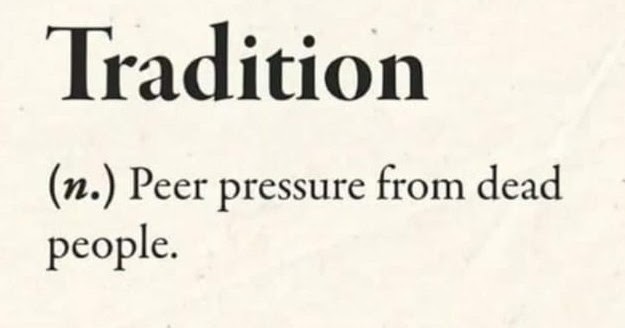
Truth is, we live in a world that’s full of human-made social constructs. In time, these social constructs become some sort of truth or law, which we (humans) feel should never be broken.
As diaspora, we tend to sometimes feel hesitant when talking about our culture for fear of getting it wrong. What we need to understand is that our culture (through our experiences) can never be wrong. And it shouldn't be a complete match to others' too. #myculture #EastAsian
— 沅 (@yenooi) 10:04 AM ∙ Mar 27, 2020
I constantly question whether what I write is ‘accurate’ and ‘necessary’ and it becomes harder as others start to question it too. But, if we remind ourselves that writing is just a job, like all others, and that the experiences that we bring as individual writers is what makes it ‘art’, then, I guess I’m doing my job right.
Do you see yourself in your creative work? I would love to hear about it.
I’ll leave you with a brand new poem below that was inspired by reading Mehta.
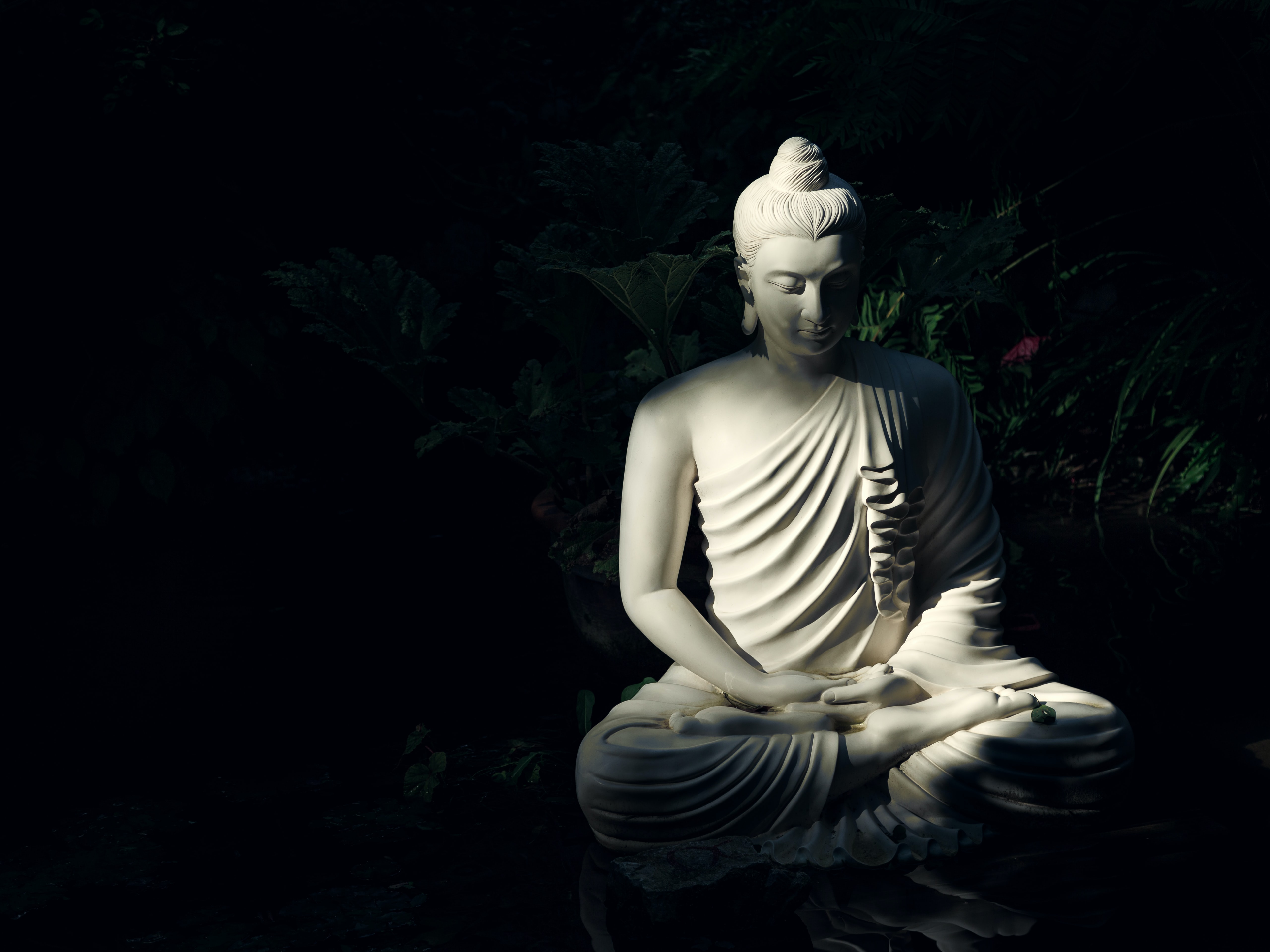
Buddha
There are three of you from my childhood:
Laughing, Sleeping, and the Prince.
I’ve always known that You
are all the same. I never
questioned why you were different.
Round and bubbly, you’re always laughing
sometimes with children climbing all around.
Quiet and calm, you’re always sleeping,
even when I glide my hands,
from your head to the ground.
Your story, drawn across the walls
in murals that were simple and childlike,
told me of enlightenment.
Enlightenment!
Even as a child, I recognised it
as the perfect state of goodness and purity.
No ties, no guilt, no binds,
not right, not wrong, not blind,
not caring, not cruel.
Just true.
There are three of you in my memory
not unlike the wise men,
but you bring me nothing
and you ask for nothing.
I learnt to chant, I learnt to pray,
but best of all, I learnt
to love being near you.
Not for salvation, not for religion.
Just for the peace of being alone with myself
in the quiet that you always bring.
The only time I can shut out the world
and people look on in respect,
rather than questioning
why someone might want to be solitary.
It seems that being with you
isn’t being alone.
There are three of you from my childhood.
